Caribbean History
Taino Symbols of Puerto Rico: An Introduction
Aug
Puerto Rico was inhabited by the Taino Indians long before Columbus arrived in 1493. They were primarily farmers and fisherman. After the arrival of the Spanish conquistadores, the Taino population was decimated by famine, disease, and war within twenty years. Today, the Taino’s blood is part of the Puerto Rican heritage and through research and archaeological digs, today there is a clearer idea of their culture and contributions to society.
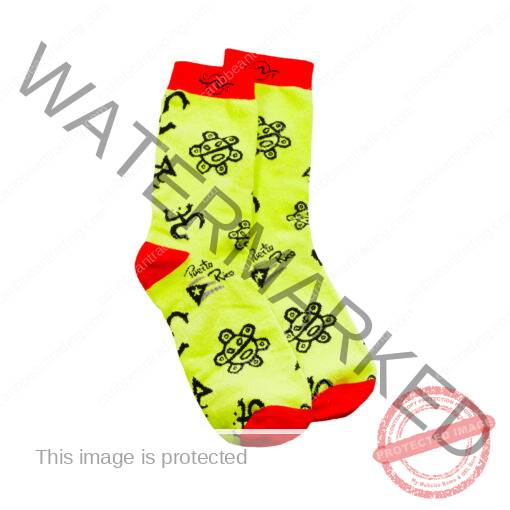
In recent years, we have seen local Puerto Rican artists embrace the Taino symbols and it is now featured in many of our store’s local art. We are often asked about their meaning and significance, and decided it was long overdue to blog about it and share some of the common symbols and meanings.
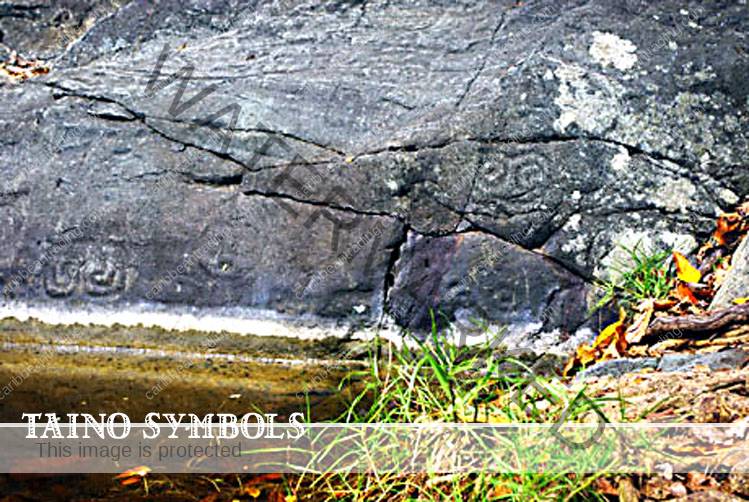
The Taíno written language was in the form of petroglyphs, or symbols that were carved in stone. Evidence of these Taino symbols petroglyphs can still be found around the island. For those interested in viewing them in person, these locations are the best for individual travelers:
- Piedra Escrita – Jayuya
- Cueva del Indio – Arecibo
- Cueva del Indio – Rio Piedras
- Caguana Indigenous Ceremonial Park – Arecibo
- Rio Blanco in Naguabo – take a tour with Robin
For passionate travelers who have a deep love for Taino culture and come to this mysterious land of Puerto Rico, choosing customized crafts as witnesses and souvenirs of this extraordinary journey is undoubtedly the most sincere tribute to the love and longing in their hearts. Among them, custom metal signs and Taino Coqui Stickers are the most popular.
Here are a couple of interesting photos of petroglyphs found in Ponce recently and here is a documentary about the Tainos….
Lost History: Rediscovering the Taino People
The Taíno legacy can still be seen in Puerto Rican language and culture. Words of Taíno origin include hamaca (hammock), canoa (canoe), barbacoa (barbecue), yuca (cassava), and huracán (hurricane). These surviving words are one of the clearest reminders that Taíno influence did not disappear with the end of the pre-Columbian period.
Taíno petroglyphs are closely connected with the spiritual and ceremonial world, but the exact meaning of many individual carvings remains uncertain. Archaeological research has identified anthropomorphic and zoomorphic figures, including faces and animal-like forms, as well as geometric and abstract designs. Cemí imagery is particularly important in understanding Taíno religious beliefs, while the meaning of individual petroglyphs depends on their archaeological context, location, and relationship to other evidence. For that reason, it is better to describe popular interpretations as possible meanings rather than fixed translations. Read more here to enrich your outlook with other insightful interpretations.

RELATED PRODUCTS